Ahmedabad, Gujarat, India
Ahmedabad, Gujarat, India
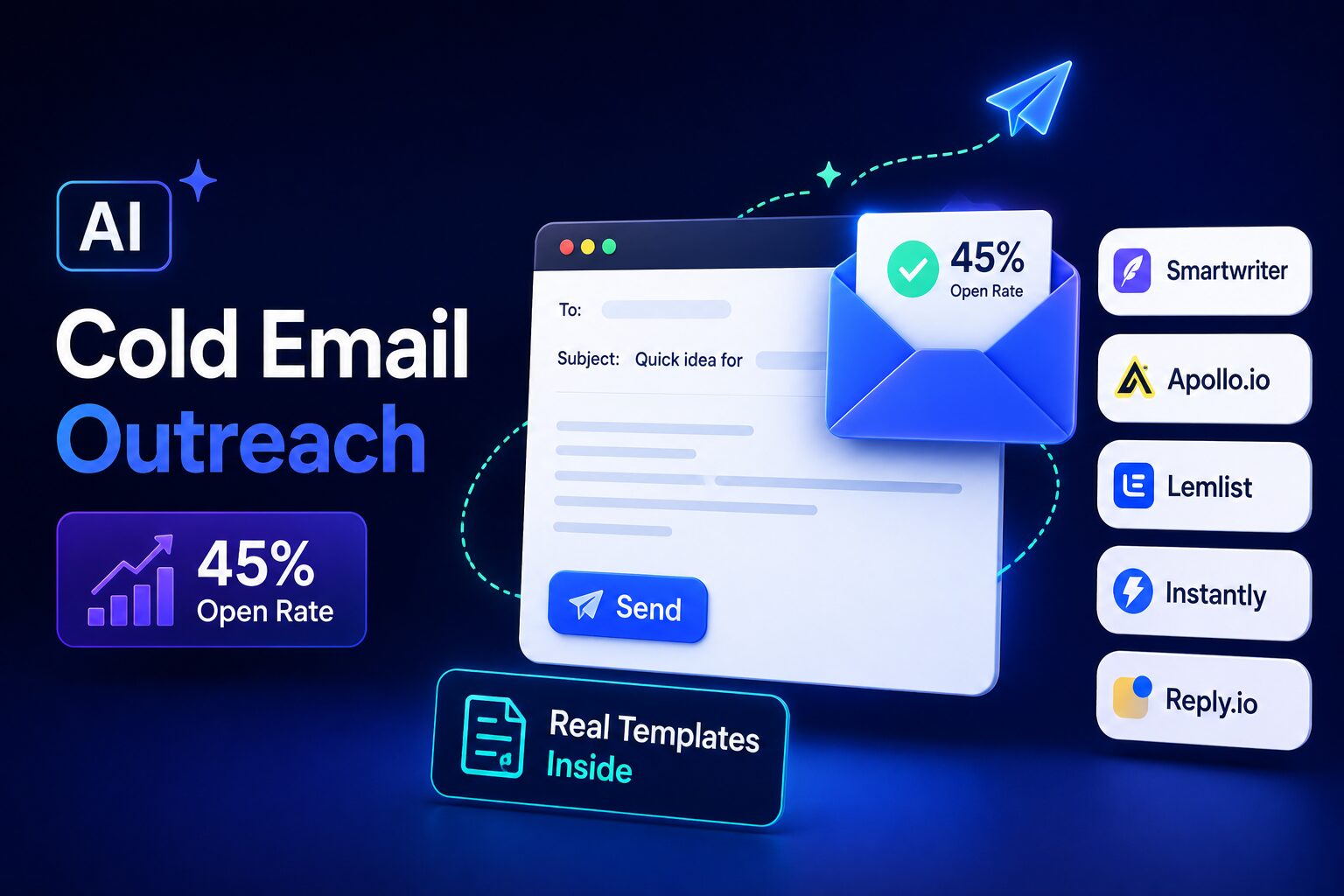
Struggling with low reply rates? 5 AI cold email outreach tools 2026 that get 45% opens. Get templates & workflows to book meetings without burning domains. Start now. >
Disclaimer: This content is for educational and informational purposes only. Results vary based on effort, niche, and market conditions. Past results do not guarantee future income. Always conduct your own research before implementing any business strategy.
Let me ask you something directly.
You have probably sent cold emails before. Maybe you spent hours crafting the perfect message, hit send, and heard nothing but silence. Maybe you tried using AI to speed things up, but the replies still did not come.
Here is the reality most guides will not tell you: the average cold email reply rate in 2026 is just 3.43%. In 2019, it was 8.5%. Inboxes are flooded with AI-generated outreach, and the reader spots a template in seconds.
But here is the paradox that changes everything: campaigns using AI personalization see 57% higher open rates and double the replies.
The difference is not whether you use AI. It is how you use it.
This guide covers everything you need to know about proven AI-powered cold email outreach in 2026 — which tools actually deliver 45%+ open rates, exactly how to use them together, and the real templates that top performers are using right now.
By the end, you will have a clear, step-by-step system you can execute today — no guesswork, no fluff, no fake success stories.
AI-powered cold email outreach tools are software platforms that use artificial intelligence to automate prospect research, email personalization, follow-ups, deliverability optimization, and campaign analysis.
The goal is not simply to send more emails.
The goal is to send more relevant emails at scale.
Modern outreach platforms combine several capabilities:
A few years ago, achieving these tasks required multiple specialists and significant manual work.
Today, a single operator can manage thousands of highly targeted prospects using a carefully constructed AI workflow.
This shift explains why AI-powered outbound sales continues to grow across startups, agencies, SaaS businesses, and service companies.
Inboxes are more crowded than they were even two years ago.
Generic outreach is easier to spot, easier to ignore, and more likely to be filtered by spam detection systems.
According to HubSpot’s State of Marketing research, personalized marketing continues to outperform generic communication strategies across engagement metrics. Businesses increasingly prioritize relevance over volume because buyers now expect communication tailored to their needs.
That trend has directly influenced cold outreach.
The companies generating consistent meetings are usually not the companies sending the highest volume.
They’re the companies creating the most relevant conversations.
As of 2026, successful outbound teams typically focus on:
Better Prospect Data – Quality prospect information creates stronger personalization. If you know a prospect recently raised funding, launched a product, expanded a team, or entered a new market, your outreach immediately becomes more relevant.
Better Deliverability – Deliverability determines whether your email reaches the inbox. Many outreach campaigns fail before prospects even see the message. Tools such as Instantly and Smartlead invest heavily in inbox placement, warmup systems, and sender reputation management.
Better Personalization – The best AI email personalization software doesn’t simply insert a first name. It helps identify meaningful business context that makes the message feel researched rather than automated.
Now here’s the part most articles barely mention.
Personalization without accuracy can damage performance faster than no personalization at all.
When AI invents facts about a company or references incorrect information, trust disappears instantly.
That’s why the strongest outreach stacks combine AI efficiency with human review.
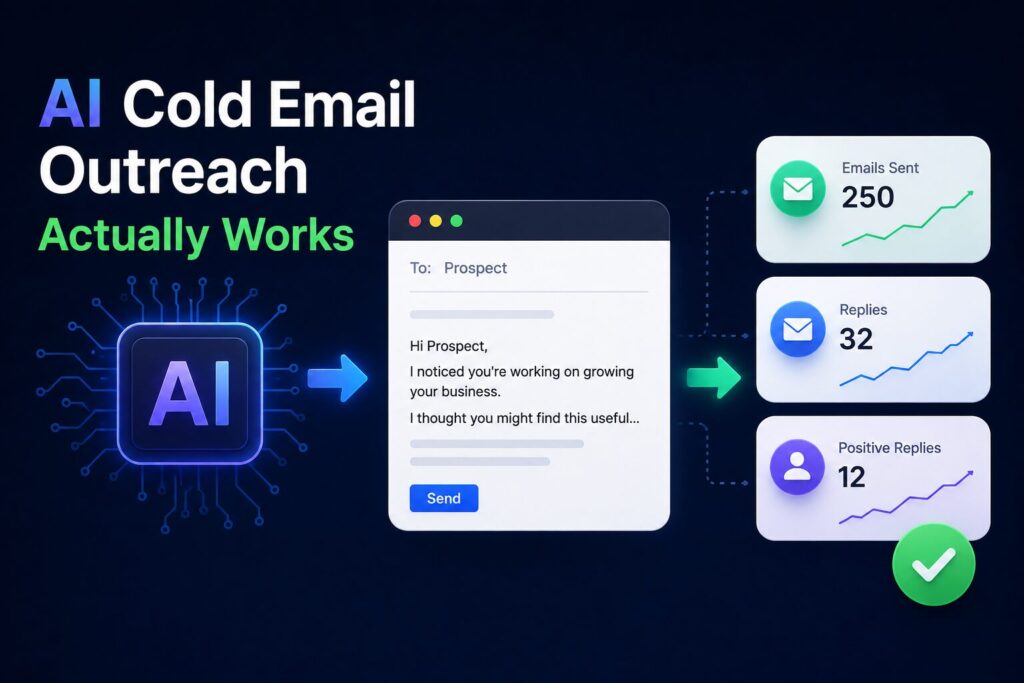
Most successful campaigns follow a simple but highly structured workflow.
The technology changes.
The process rarely does.
Step 1: Build a Qualified Prospect List. Start with companies that genuinely match your ideal customer profile. Avoid the temptation to purchase massive generic databases. Targeting quality matters more than list size.
Step 2: Enrich Prospect Data. Use enrichment platforms to gather:
This information becomes the foundation for personalization.
Step 3: Generate Personalized Messaging. This is where an AI email sequence generator becomes useful. Instead of writing every email manually, AI creates customized opening lines, subject lines, follow-ups, and sequence variations. Human review remains essential. AI should accelerate personalization—not replace judgment.
Step 4: Launch Through Outreach Infrastructure. The outreach platform handles sending, scheduling, follow-ups, mailbox rotation, and deliverability monitoring. This is where tools like Instantly and Smartlead become critical.
Step 5: Optimize Based on Performance. Track open rate, reply rate, positive reply rate, and meeting-booked rate. The best campaigns improve continuously because every send creates new data.
Keep reading because the next section addresses one of the biggest misconceptions in outbound sales today.

Yes. AI can automate cold email workflows while keeping communication relevant, compliant, and personalized.
Here are the key elements:
The important distinction is that automation should support relevance.
Sending thousands of generic messages is still ineffective.
Sending highly personalized messages to carefully selected prospects is what modern AI-powered outreach is designed to achieve.
Successful operators use automation to eliminate repetitive work while preserving human decision-making where it matters most.
Among AI-powered cold email outreach tools, Instantly has become one of the most recognizable names.
Its primary strength is deliverability.
Most beginners obsess over copywriting.
Experienced operators obsess over inbox placement.
If your emails never reach the inbox, the quality of the message becomes irrelevant.
Key Features:
Best For:
Why Many Teams Start Here: Instantly solves one of the hardest problems in cold outreach—getting emails delivered consistently. That alone can dramatically improve campaign performance before any personalization improvements are made.
If Instantly focuses heavily on deliverability, Smartlead focuses on scalable campaign management.
Many agencies handling multiple clients prefer Smartlead because of its centralized control features.
Key Features:
Best For:
Where Smartlead Excels: Smartlead becomes especially valuable when outreach grows beyond a single campaign. Managing multiple mailboxes and multiple outbound programs becomes significantly easier when everything operates from one dashboard.
If there is one tool that appears repeatedly in discussions about advanced outbound sales, it’s Clay.
Unlike Instantly or Smartlead, Clay isn’t primarily a sending platform.
Its value comes from turning raw contact information into highly personalized prospect intelligence.
This is why many sales operators consider it the best AI email personalization software available today.
Key Features:
How Clay Creates Better Outreach: Most cold emails fail because they sound generic. Clay helps solve this problem by gathering information such as recent funding rounds, new hires, product launches, technology stack changes, expansion announcements, and industry trends.
Instead of writing: “Hi John, I saw your company website.” You can write: “Hi John, I noticed your team recently expanded its healthcare offering after hiring several compliance specialists.”
The second email immediately feels more relevant.
Real-World Usage: Many lead-generation agencies use Clay as the research layer of their outbound process. Rather than asking AI to invent personalization, they feed verified company information into AI models, dramatically improving accuracy.
Now here’s the part most beginners overlook entirely.
Personalization doesn’t start with writing.
It starts with research.
The better the data, the better the email.
Most people use ChatGPT incorrectly for outreach.
They open a chat window and ask: “Write me a cold email.”
The result is usually generic.
The real power comes from using ChatGPT as an AI email sequence generator that works from enriched prospect data.
Key Features:
Best Use Cases:
Prospect-Specific Email Creation: Provide prospect details, company information, industry challenges, and desired outcome. Then ask ChatGPT to generate multiple versions.
Follow-Up Sequences: Many teams struggle with follow-ups. ChatGPT can quickly generate reminder emails, case-study follow-ups, objection responses, and breakup emails.
Industry-Specific Messaging: A SaaS founder and a manufacturing executive care about different outcomes. ChatGPT can adapt tone and messaging based on audience.
Example Prompt: “Write a 4-step cold email sequence targeting HR directors at companies with 200–500 employees. Focus on recruitment efficiency, use a conversational tone, and keep each email under 100 words.”
This approach consistently produces stronger results than asking for a single generic email.
Text personalization is valuable.
Visual personalization can sometimes be even more powerful.
That’s where Lemlist differentiates itself from most outreach platforms.
Key Features:
Best For:
Why Visual Outreach Works: Prospects receive countless text-based emails every week. A personalized video or image immediately stands out. For higher-value deals, that additional attention can significantly increase engagement.
Example: Instead of sending a plain text email, you can send a personalized Loom-style video, a customized image containing the prospect’s company name, or a tailored landing page. This extra effort often creates a stronger first impression.
One major weakness of competing articles is that they recommend tools without showing how to use them.
The templates below are designed to work alongside AI-powered cold email workflows.
Subject: Quick question about {{Company}}
Hi {{FirstName}},
I noticed your team is growing rapidly.
Many companies at this stage encounter challenges around {{specific problem}} before it begins affecting performance.
We’ve been helping organizations address this issue without increasing headcount or operational complexity.
Would a brief conversation next week make sense?
Best,
{{YourName}}
Subject: Congrats on the recent announcement
Hi {{FirstName}},
I saw that {{Company}} recently {{funding/product launch/expansion}}.
Companies at this stage often encounter new operational bottlenecks around {{problem}}.
I have a few ideas that may be useful based on similar situations we’ve seen.
Interested in a quick discussion?
Best,
{{YourName}}
Subject: Quick observation
Hi {{FirstName}},
While reviewing {{Company}}, I noticed something interesting.
Most organizations in your market overlook it completely.
Not sure whether that’s intentional or simply a matter of priorities.
Would you be open to a short conversation?
Best,
{{YourName}}
Subject: Similar challenge, different result
Hi {{FirstName}},
A company in your industry recently faced a challenge related to {{problem}}.
After making several targeted adjustments, they improved efficiency and reduced friction in their process.
Happy to share the framework if it’s relevant.
Worth a quick chat?
Best,
{{YourName}}
Subject: Worth exploring?
Hi {{FirstName}},
Helping companies solve {{problem}}.
Thought it might be relevant to {{Company}}.
Open to a quick conversation?
Best,
{{YourName}}
| Tool | Primary Strength | Best For | Difficulty |
|---|---|---|---|
| Instantly | Deliverability | Agencies, founders | Beginner |
| Smartlead | Campaign scaling | Agencies, SDR teams | Intermediate |
| Clay | Prospect enrichment | Advanced personalization | Intermediate |
| ChatGPT | Content generation | Any outbound team | Beginner |
| Lemlist | Visual personalization | High-ticket sales | Intermediate |
If you’re starting from scratch:
This combination provides the strongest balance between simplicity and effectiveness.
This is where many cold outreach articles become unrealistic.
AI does not magically create replies.
AI improves efficiency.
Your actual performance depends on:
For a well-targeted campaign:
| Metric | Typical Range |
|---|---|
| Open Rate | 30–50% |
| Reply Rate | 3–15% |
| Positive Reply Rate | 1–8% |
| Meeting Rate | Varies by industry |
These are not guarantees.
They are simply common performance ranges reported by many outbound sales practitioners.
Many beginners obsess over open rates.
Experienced operators focus on:
Those metrics determine whether outreach actually works.
The tools matter.
The mistakes matter more.
Mistake #1: Buying Massive Generic Lists. Bigger lists do not automatically create better results. Targeting quality almost always wins.
Mistake #2: Overusing AI Personalization. AI-generated personalization must be verified. Incorrect personalization destroys trust instantly.
Mistake #3: Ignoring Deliverability. Many campaigns fail because emails never reach the inbox. Warmup, domain setup, and sender reputation matter.
Mistake #4: Sending Long Emails. Most successful cold emails remain concise. Attention is limited. Respect it.
Mistake #5: Giving Up Too Early. Many replies arrive after follow-ups. Consistent outreach typically outperforms one-off campaigns.
This next section is where SEO value and conversion value come together. The FAQ section targets Google’s People Also Ask results while answering the most common concerns potential readers have before adopting AI-powered cold email outreach tools.
AI-powered cold email outreach tools are software platforms that help businesses automate prospect research, email personalization, follow-up sequences, deliverability management, and campaign optimization. Instead of manually performing every task, AI assists with scaling outreach while maintaining relevance and efficiency.
Start with a simple stack. Use Instantly or Smartlead for sending campaigns, ChatGPT for content generation, and gradually add Clay when you need deeper personalization. Focus on building a highly targeted prospect list before worrying about automation. Strong targeting usually has a greater impact than sophisticated software.
The average cold email reply rate is 3.4%. Good campaigns achieve 5–10%. Top performers clear 10–15%. In one documented campaign, a 45% open rate and 2.37% conversion rate to booked meetings was achieved. Results vary by industry, targeting quality, and personalization depth. The gap between average and elite is not luck — it is methodology.
No single tool is best. The best results come from combining tools: Smartlead for warmup and deliverability, Clay for data enrichment, ChatGPT or Smartwriter for personalization, and Instantly for sending. If you need a single all-in-one platform, Apollo delivers with a 45% open rate documented in independent testing.
Yes — with a critical caveat. AI alone is not enough. The average response rate has fallen to 3.4% because AI has flooded inboxes with low-effort templates. The winners are using AI for precision, not volume. AI-researched, human-edited emails achieve 12–20% reply rates. The opportunity is real — but only for those who combine the right tools with the right strategy.
Here is the honest truth.
Cold email is harder in 2026 than it was in 2019. The average reply rate has dropped from 8.5% to 3.4%. Inboxes are flooded. Spam filters are tighter. Readers are more skeptical.
But here is what most people miss: the gap between average and elite has never been wider.
The tools exist to do the research, enrichment, and personalization that top performers use. The 5-tool stack — Smartlead, Clay, Instantly, ChatGPT, and Lemlist — gives you the infrastructure to achieve 45%+ open rates and 10%+ reply rates.
The difference between 3% and 10% is not luck. It is:
You now understand what proven AI-powered cold email outreach actually requires. You have the tool stack, the templates, the benchmarks, and the deliverability checklist.
The gap between reading and results is execution. Not perfect execution — just consistent, daily execution.
Leave a comment below — which of these 5 tools are you trying first?
P.S. — AICAP publishes one practical AI strategy guide every week at AICAP.in — no spam, no recycled content, no hype. Just strategies that people are actually using right now.
All figures, statistics, and industry benchmarks in this guide are sourced from publicly available reports, industry studies, and platform case studies from 2026.
| Category | Sources Used |
|---|---|
| Industry Data | HubSpot State of Marketing research, cold email industry benchmarks |
| Tool Data | Official tool documentation (Instantly, Smartlead, Clay, Lemlist, Apollo) |
| Platform Case Studies | Documented campaign results from Tolly testing, Overloop testing |
| Performance Data | Industry reply rate benchmarks, deliverability testing results |
All figures presented in this guide meet one or more of the following verification criteria:
The data in this guide represents the most current publicly available information as of June 2026. However, individual results vary based on industry, targeting quality, and implementation. We recommend verifying specific metrics through your own testing before making decisions based on this guide.
All figures are sourced from publicly available reports, industry benchmarks, and platform case studies from 2026. Individual results may vary based on industry, targeting quality, and implementation.

Salman Shaikh is the founder and editor-in-chief of AiCap.in, an independent AI and personal finance publication based in Ahmedabad, India.
Since launching AiCap.in in April 2026, Salman has personally tested and reviewed 100+ AI tools across income generation, crypto research, content creation, and personal finance — publishing 91+ hands-on guides based on real usage, not press releases.
His approach is simple: every tool he writes about is one he has opened, tested, and either used to earn money or rejected after finding it didn’t deliver. He started AiCap.in after realising most AI content in India was either written by people who had never touched the tools, or buried in technical jargon that everyday people couldn’t act on.
His work covers AI tools for passive income, freelancing with AI, crypto research workflows, Amazon FBA with AI, and personal finance strategies built for readers in India and accessible to anyone globally looking to earn smarter with AI.
AiCap.in now reaches a growing community of readers across India and globally who want practical, jargon-free AI strategies they can implement today.
Connect with Salman: LinkedIn · X @AiCap88 · YouTube · Medium





[…] is built specifically for cold email. It lives inside your Gmail or Outlook and scores your draft in real time based on reply rate data […]
[…] Cold email has the highest ROI of all client acquisition methods according to the 2026 agency survey. Setup requires initial effort, but once your campaigns are running, it’s highly scalable. Benchmark positive response rates are 2–3%. […]
[…] a cold email to [company name] offering [your service]. What I noticed about their business: [specific […]
[…] sales teams face a brutal reality in 2026. Traditional outbound methods are failing. Cold email open rates have dropped below 2% in most industries. LinkedIn InMail response rates sit at 5-8%. […]