Ahmedabad, Gujarat, India
Ahmedabad, Gujarat, India

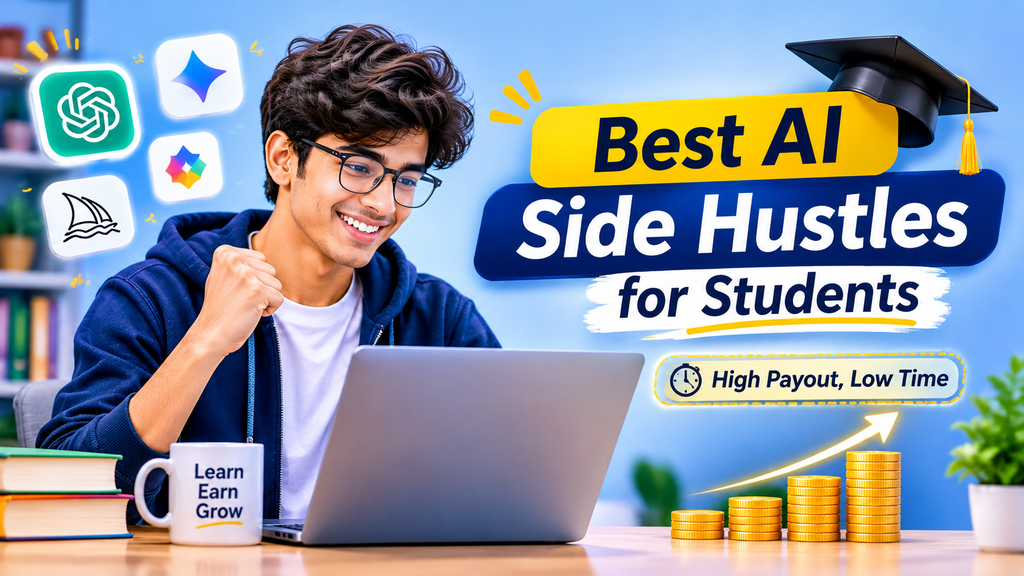
Discover 27 realistic AI side hustles for students in 2026. Ranked by effort and time, learn the exact tools, workflows, and platform rules you need to start.
By Salman Shaikh | Last Updated: October 26, 2026

Disclaimer: This content is for educational and informational purposes only. Earnings and results vary significantly by individual, niche, effort, and market conditions. We do not guarantee any income outcome. Always verify platform rules and visa restrictions before starting any freelance work.
You have looked at your bank account after paying for textbooks and thought the same thing most students think: there has to be a better way than working a minimum-wage retail job that takes 20 hours of my week. There is.
AI side hustles for students mean using free or low-cost AI tools—ChatGPT, Claude, Midjourney, CapCut AI—to offer services or create products that work around your class schedule.
You do not need to be a computer science major. You do not need coding skills. But you do need to understand one thing: AI tools do not replace the work; they amplify your efficiency. The students who make money are the ones who use AI to draft text, summarize data, and automate repetitive tasks while they focus on client communication and quality control.
This guide ranks 27 realistic AI side hustles by payout versus time invested. No fake guru claims, just the actual workflows, the tools you need, and the realities of the 2026 gig economy.
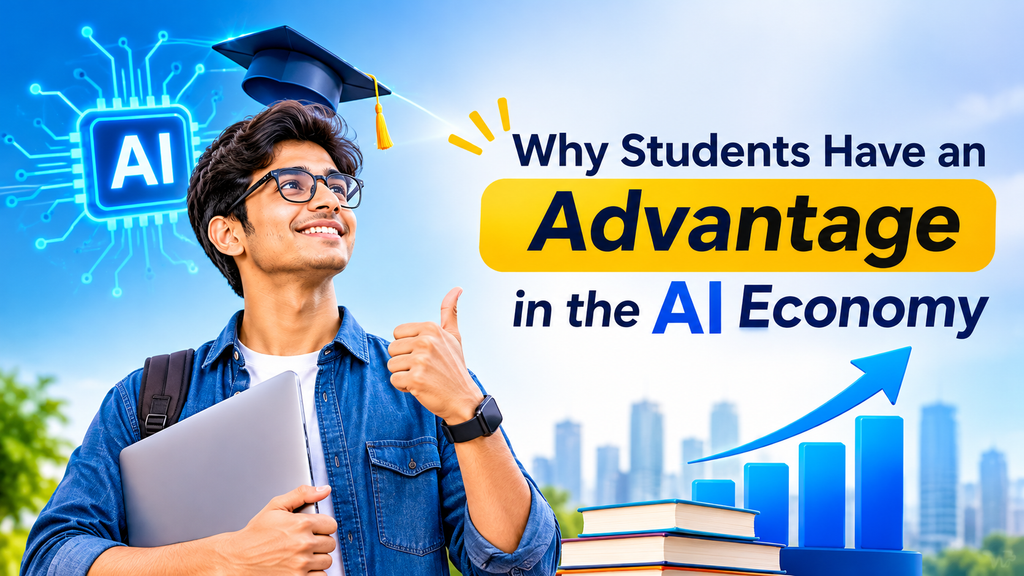
Traditional part-time work (cafes, retail) trades hours directly for dollars. AI-powered gigs are different because they allow you to build leverage.
Furthermore, students have structural advantages in the AI gig economy that full-time workers don’t:
Every AI side hustle in this list is ranked using a simple framework:
What it is: You act as a human evaluator for large language models, rating AI responses for accuracy, helpfulness, safety, and clarity. Companies like DataAnnotation.tech, Outlier (Scale AI), and Surge AI hire thousands of contractors for this work.
Why it works: High-quality, human-verified data is the most expensive commodity in 2026. If you have strong writing, coding, or math skills, you can earn competitive hourly rates compared to standard campus jobs.
Tools: A laptop and a stable internet connection.
What it is: Create a YouTube channel using AI for scripts, voiceovers, and B-roll footage. You never appear on camera.
Why it works: YouTube’s algorithm rewards watch time and retention, regardless of whether a human is on screen.
The Catch: This is a long-term play. You will not make money in month one. It requires consistent posting (2-3 videos a week) for 3-6 months before the algorithm picks you up.
Tools: ChatGPT (scripts), ElevenLabs (voiceover), CapCut or InVideo (editing).
What it is: Manage social media for local businesses (restaurants, gyms, salons) using AI for content creation and scheduling. The AI does the drafting; you handle the strategy and client communication.
Why it works: Local business owners are overwhelmed by digital marketing. If you can take over their social media for 5 to 10 hours a week, you become indispensable.
Tools: Canva AI, ChatGPT, Meta Business Suite.
What it is: Use AI-powered editing tools like CapCut AI to create short videos (Reels, TikTok, Shorts) for creators and small businesses. Turn one long video into 10 short clips automatically.
Why it works: Every creator and business needs short-form video right now, but most hate editing. AI now handles 80% of the workflow. Your value is in knowing what clips work and how to structure hooks.
Tools: CapCut AI, Descript, Opus Clip.
What it is: Create digital products once using AI—Notion templates, prompt libraries, social media post templates—and sell them repeatedly on Gumroad or Etsy.
Why it works: This is the closest thing to “passive income.” You do the work once. However, you must create products that solve a specific, painful problem, not generic “prompt collections.”
Tools: Notion, Canva, ChatGPT.
What it is: Use AI writing tools to draft blog posts, landing pages, and email sequences. You edit, fact-check, and add the human voice.
The Catch: You cannot fully automate this. Clients pay for human judgment and quality assurance. If you just send raw ChatGPT output, you will be fired.
Tools: ChatGPT Plus, Grammarly, SurferSEO.
What it is: Offer tutoring services in your areas of expertise (math, science, languages) and use AI to generate curriculum, practice questions, and study guides.
Why it works: AI handles the laborious structuring of information; you provide the actual teaching and empathy. Always fact-check AI outputs before giving them to students.
Tools: ChatGPT, Khanmigo.
What it is: Use Midjourney to create designs for t-shirts, mugs, and stickers. Upload to Redbubble or Printful. The platform handles production and shipping; you collect royalties.
Why it works: Zero inventory required. Focus on micro-niches (e.g., “programmer jokes” or “desi quotes”) rather than saturated categories like generic pet art.
Tools: Midjourney, Redbubble.
What it is: Use AI tools to help job seekers rewrite their resumes and optimize LinkedIn profiles to pass Applicant Tracking Systems (ATS).
Why it works: ATS filters reject a massive percentage of resumes before a human ever sees them. You provide the human touch to tailor the AI output to specific job descriptions.
Tools: Jobscan, ChatGPT.
What it is: Build custom chatbots for small businesses to handle customer service or appointment booking using no-code platforms.
The Catch: Clients want to know a human is available when the chatbot fails. Offer an “AI + Human” maintenance package.
Tools: Botpress, CustomGPT, Make.com.
What it is: If you are fluent in two or more languages, use AI to do the heavy lifting of translation, then review and correct the output.
The Rule: Only take gigs in languages you are genuinely fluent in. You must be able to catch the AI’s mistakes.
What it is: Use AI image generators like Midjourney or Canva AI to create custom logos and basic brand kits.
The Warning: This is a saturated market. Differentiate by offering fast turnaround and clean vector files (EPS/SVG), not just a JPG.
What it is: Use ElevenLabs or similar tools to create voiceovers for YouTube videos, online courses, and explainer videos.
The Catch: Clients want human voices for premium projects. AI voiceover is best for budget creators or high-volume channel automation.
What it is: Use AI tools to scan local businesses’ Google My Business profiles and websites. Provide a report showing them why they aren’t ranking on Google Maps and how to fix it.
Why it works: Local businesses know they need SEO, but don’t know how to do it. AI makes auditing fast, and you charge for the strategy and implementation.
What it is: Use AI to turn 1-hour long podcasts into short, viral clips and written show notes for creators.
Tools: Descript or CapCut AI for clips, ChatGPT for show notes.
What it is: Help PhD students or small companies clean up messy data sheets using AI prompts.
Why it works: Academic researchers and market research firms often have messy data but lack the time or technical skills to clean it.
What it is: High-level executives are too time-constrained to post regularly. You use AI to draft their thoughts into professional posts, then they approve and post.
Why it works: Executives value consistency and voice. AI helps you draft quickly, but you still need to understand their industry.
What it is: Offer services to photographers, real estate agents, or families to restore old photos or enhance low-quality images.
Tools: Topaz Gigapixel, Let’s Enhance.
What it is: Build and manage weekly newsletters for small local businesses using AI content tools.
What it is: Platforms like Remotasks and Toloka pay for simple AI training tasks: image labeling, audio recording, and text correction.
Why it works: Perfect for beginners with zero experience who want to earn small amounts of money in their spare time.
What it is: Use AI to write content for small local businesses that do not have websites yet—dentists, plumbers, electricians.
Why it works: These clients do not need award-winning content. They need decent, factually correct content that helps them show up on Google.
What it is: If you are learning to code, use AI coding assistants like GitHub Copilot to write simple automation scripts for small clients.
The Warning: Only do this if you understand the code the AI produces. Do not copy-paste code you do not understand.
What it is: Sell your AI-summarized course notes to other students in your classes. Use AI to condense lecture recordings and readings into study guides.
What it is: Etsy sellers need dozens of product descriptions. Use AI to generate SEO-friendly descriptions based on product photos.
What it is: Micro-influencers need daily captions but cannot afford full-time social media managers.
What it is: Solopreneurs need help with repetitive tasks: email drafting, meeting scheduling, and research summaries.
What it is: Package and sell collections of high-quality prompts for ChatGPT, Claude, or Midjourney on platforms like PromptBase.
Week 1: Choose and Prepare
Week 2: Build Portfolio
Week 3: Client Acquisition
Week 4: First Client and Deliver
Q1: How do I get started with AI side hustles for students in 2026?
Pick ONE hustle from the TIER 1 list above. Get free access to ChatGPT or Claude. Spend one weekend learning the specific workflow for that hustle. Create three sample pieces for your portfolio. Then start offering services. Do not try multiple hustles at once—that is how students burn out.
Q2: How much can you realistically earn?
Realistic earnings vary wildly based on your skill and the time you put in. Most beginners earn very little in their first month. Income scales only when you find a specific niche, master the workflow, and consistently deliver value. Do not expect passive income from day one—consistency is what separates people who earn from people who quit.
Q3: Can I do AI side hustles while studying abroad on a student visa?
Generally, yes, with restrictions. Most student visas allow part-time work (typically 20 hours/week) during academic terms. However, AI side hustles are often classified as “freelance” or “self-employment.” You must verify your specific visa conditions with your international student office before starting.
Q4: What’s the biggest mistake students make?
Trying to fully automate everything. AI tools are powerful assistants, not replacements. Students who treat AI as a 100% solution produce low-quality work that clients reject. Students who treat AI as a 60-80% solution and add their own judgment build sustainable businesses.
Q5: Should I invest in paid AI tools as a beginner?
Start free, then upgrade. Every AI tool mentioned has a functional free tier. Start with free versions until you have a client paying you. When you have recurring revenue, upgrade to paid tiers (like ChatGPT Plus or Midjourney) to improve your output quality.
The AI gig economy is not going away. In 2026, hundreds of thousands of people worldwide earn income by providing the human judgment that AI models need to learn and improve. For students, this represents a flexible, well-paying, and intellectually engaging way to earn while managing the demands of academic life.
The student who succeeds in 2026 isn’t the one who knows the most about AI tools. The successful student is the one who combines AI efficiency with human judgment, client communication, and consistency. AI gives you leverage. You provide the value.
Leave a comment below — which AI side hustle are you trying first?
P.S. — We publish one practical AI guide every week at AICAP.in. Subscribe below — no spam, no fluff, just strategies that actually work.
This guide avoids anonymous seller anecdotes, fabricated case studies, and unverifiable income claims. Market data is attributed to publicly reported analyst forecasts where possible. Because platform policies, pricing, and market conditions change, verify current details through the links below before making business decisions.
Official Sources to Verify:
Verification Standards:
Figures in this guide are presented only when they can be attributed to analyst forecasts, platform reports, or official documentation. Individual results vary based on niche, effort, pricing, and market conditions. Verify specific metrics through your own testing before making decisions based on this guide.

Salman Shaikh is the founder and editor-in-chief of AiCap.in, an independent AI and personal finance publication based in Ahmedabad, India.
Since launching AiCap.in in April 2026, Salman has personally tested and reviewed 100+ AI tools across income generation, crypto research, content creation, and personal finance — publishing 91+ hands-on guides based on real usage, not press releases.
His approach is simple: every tool he writes about is one he has opened, tested, and either used to earn money or rejected after finding it didn’t deliver. He started AiCap.in after realising most AI content in India was either written by people who had never touched the tools, or buried in technical jargon that everyday people couldn’t act on.
His work covers AI tools for passive income, freelancing with AI, crypto research workflows, Amazon FBA with AI, and personal finance strategies built for readers in India and accessible to anyone globally looking to earn smarter with AI.
AiCap.in now reaches a growing community of readers across India and globally who want practical, jargon-free AI strategies they can implement today.
Connect with Salman: LinkedIn · X @AiCap88 · YouTube · Medium





[…] AI side hustles from Reddit tested. We separate real income ideas from hype. Discover verified side hustles, tools, and strategies that actually work in 2026. […]
[…] Side Hustle Models Work Best With Each AI […]
[…] a broader ranked list of 27 AI side hustles tested in India with real rupee earnings data, read our best AI side hustles for students guide. If you want real Reddit-tested results from AI side hustlers who documented their experiments […]