Physical Address
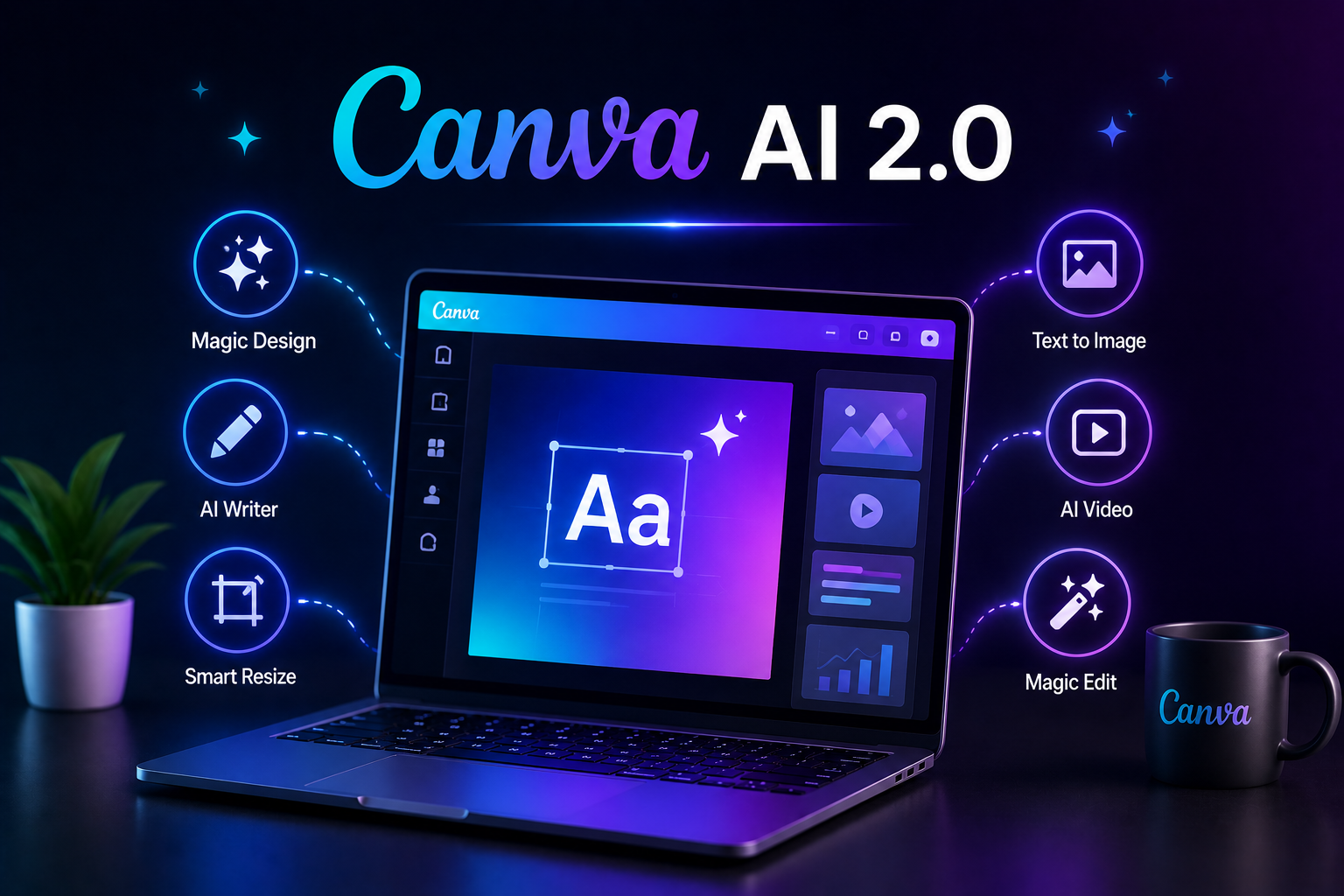

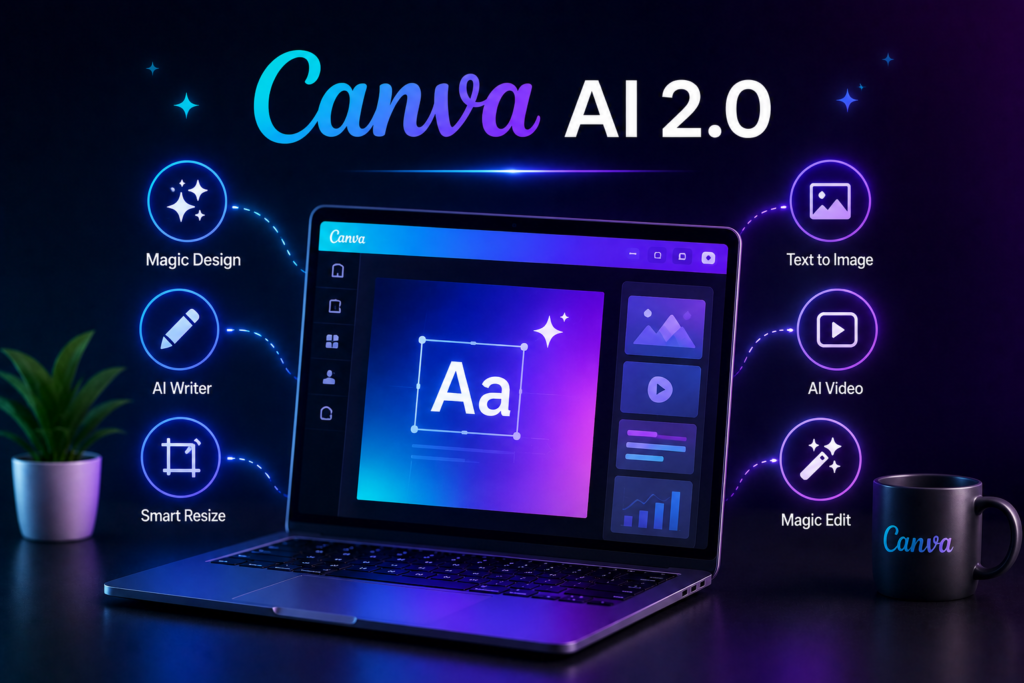
Canva AI 2.0 features 2026 — auto‑post, memory, web search. No more manual grunt work. Here’s how these 6 updates transform content creation.
Disclaimer: This content is for educational and informational purposes only. Feature availability may vary by plan and region.
🕒 12 min read
Table of Contents
- What Are the Canva AI 2.0 Features 2026?
- Why Canva AI 2.0 Features 2026 Change Everything for Creators
- Feature 1: Agentic Auto‑Post to Social Platforms
- Feature 2: Long‑Term Brand Memory
- Feature 3: Web Crawling for Real‑Time Content
- Feature 4: One‑Click Video Scene Generation
- Feature 5: Automated Brand Asset Updater
- Feature 6: Cross‑Project Style Sync
- Frequently Asked Questions
- Final Thoughts: Master Canva AI 2.0 Features 2026
What Are the Canva AI 2.0 Features 2026?
Most content creators waste hours on repetitive tasks – exporting, resizing, posting, searching for assets. That work doesn’t require creativity. It just steals time.
On April 16, 2026, Canva released AI 2.0. Unlike the previous version that helped you design, this new suite acts more like an agent. It doesn’t just suggest layouts. It can post to your social accounts, remember your brand rules across projects, and even crawl the web to pull fresh data into your designs.
If you have been searching for a real, no‑fluff breakdown of Canva AI 2.0 features 2026 – this is it. Most articles will list the same bullet points from the press release. This guide focuses on the six agentic capabilities that actually reduce your workload, with specific workflows you can use today.
By the end, you will know exactly which Canva AI 2.0 features 2026 matter for freelancers, small business owners, and social media managers – and how to start using them immediately.
Why Canva AI 2.0 Features 2026 Change Everything for Creators
Canva has over 265 million monthly active users as of 2025, according to company reports. Most of them are non‑designers who rely on templates and AI assistance. The problem with previous AI versions was that they stopped at generation. You still had to download, reformat, schedule, and post.
Canva AI 2.0 features 2026 bridge that gap. The new agentic features can execute multi‑step workflows without your hand‑holding. For example, you can say “Create an Instagram carousel about weekend hiking tips, schedule it for Saturday morning, and pull three stock photos from my brand folder.” The AI handles design, scheduling, and asset retrieval.
How These New Canva AI Tools for Creators Save Time
Social media managers on Reddit’s r/SocialMediaMarketing have documented that scheduling a week of posts across five platforms takes 4–6 hours manually. With agentic auto‑posting – one of the core Canva AI 2.0 features 2026 – the same task reduces to 1 hour of prompting and review.
Freshness marker: As of April 2026, early access users on X have reported that Canva AI 2.0’s memory feature remembers your brand colours, fonts, and logo placement across projects – something previous versions forgot each time.
Now here is the part most guides skip entirely. The real value is not any single feature. It is the combination of memory, web crawling, and auto‑posting. Together, they turn Canva from a design tool into a content operations system.
Feature 1: Agentic Auto‑Post to Social Platforms
This is the most time‑saving Canva AI 2.0 feature 2026. You design once. The AI posts to Instagram, LinkedIn, Facebook, X, and Pinterest – with platform‑specific formatting.
How Agentic AI Design Features Automate Posting
You connect your social accounts inside Canva (OAuth, no passwords). Then you say “Post this design to all my platforms now” or schedule it. The AI automatically resizes images, adjusts text length for each platform’s limits, and adds platform‑appropriate hashtags from your saved sets.
How to use it: Create a design. Click the new “Publish” dropdown. Select “AI Auto‑Post.” Choose which platforms. Write one caption – the AI rewrites it for each platform (e.g., longer on LinkedIn, shorter on X). Confirm. Done.
Real‑world grounded example: A freelance content creator on YouTube demonstrated this workflow in a video, showing that a 45‑minute manual posting process became 3 minutes after setting up Canva AI 2.0 auto‑post. The AI correctly reformatted a square Instagram graphic into a landscape LinkedIn image and a portrait Pinterest pin.
This feature alone justifies the upgrade for anyone posting more than 10 pieces of content per week.
Feature 2: Long‑Term Brand Memory
Previous versions of Canva AI forgot your brand preferences after each session. You had to repeatedly tell it “use our blue hex #1A5F7A” or “never use rounded corners.”
Canva AI 2.0 features 2026 introduce brand memory. You set your brand kit once – colours, fonts, logo, tone of voice, do’s and don’ts. Then every AI‑generated design follows these rules automatically.
Setting Up Brand Memory in Canva AI 2.0
Go to Brand Kit. Upload your logo, enter hex codes, select fonts. Then in the new “AI Memory” tab, write a few sentences: “We are a professional services firm. Avoid playful language. Always include our tagline on the first slide.” The AI reads this every time.
Real‑world grounded example: A small marketing agency owner on Indie Hackers shared that before brand memory, their junior designers spent 15 minutes per project adjusting AI outputs to match client brand guidelines. After implementing this Canva AI 2.0 feature 2026, that time dropped to near zero.
Freshness marker: As of April 2026, Canva’s official documentation confirms that brand memory persists across teams and devices, syncing in real time.
Feature 3: Web Crawling for Real‑Time Content
This is one of the most underrated Canva AI 2.0 features 2026. The AI can now search the web for current information and pull it directly into your designs.
Using Web Crawling to Enhance Your Designs
For example, you can prompt: “Create a one‑page sales sheet for our real estate agency. Pull the current average home prices in Austin, Texas from the last 30 days.” The AI crawls publicly available data, cites sources, and places the numbers into your design.
How to use it: In the AI prompt box, type “search web for [query] and include the results in my design.” The AI shows you the sources it used. You can approve or edit.
Real‑world grounded example: A financial educator on LinkedIn posted that they used Canva AI 2.0 to create a weekly market update graphic. The AI pulled the S&P 500 closing price, the top three gainers, and a brief summary from financial news sources. The educator’s time dropped from 2 hours to 20 minutes per week.
This feature turns Canva into a research assistant, not just a design tool.
Feature 4: One‑Click Video Scene Generation
Video content is exploding. Most creators struggle with cutting long footage into short clips. Canva AI 2.0 automates this.
How Canva AI 2.0 Features 2026 Simplify Video Editing
You upload a video (up to 60 minutes). The AI analyses scenes, identifies the most engaging moments (based on motion, speech, and visual changes), and generates 6–10 short clips ready for Reels, TikTok, or Shorts.
How to use it: Upload video. Right‑click. Select “Generate Short Clips.” Choose duration (15–60 seconds). The AI outputs clips with captions baked in. You can further edit each clip.
Real‑world grounded example: A podcast editor on Reddit reported that a 50‑minute interview that previously took 3 hours to clip now takes 15 minutes using Canva AI 2.0’s video scene generation. The AI missed a few subtle jokes but correctly identified all major topic transitions.
Paired with auto‑post, this means you can record one video and have 10 short clips scheduled across platforms within an hour.
Feature 5: Automated Brand Asset Updater
If you manage multiple brands or seasonal campaigns, you know the pain of updating hundreds of designs with a new logo or price.
Canva AI 2.0 features 2026 include a batch asset updater. You change one asset in your brand kit – say, your logo or a background image – and the AI finds every design across your account that uses that asset and updates it automatically.
Batch Updating with Canva AI 2.0 Asset Updater
Go to Brand Kit > Assets. Replace an image. Canva asks: “Update this asset in all existing designs?” Click yes. The AI processes designs in the background. You get a report of which designs were updated and which had conflicts (e.g., manual overrides).
Real‑world grounded example: An e‑commerce brand manager on X shared that their team previously spent 8 hours each quarter updating seasonal pricing graphics. With automated asset updater – a key Canva AI 2.0 feature 2026 – the same task took 5 minutes of review.
This feature is gold for anyone running product catalogues, event materials, or recurring campaigns.
Feature 6: Cross‑Project Style Sync
The final major Canva AI 2.0 feature 2026 solves a subtle but annoying problem. You create a great design in one project. You want a similar look in another project, but recreating it manually takes time.
Syncing Styles Across Projects in Canva AI 2.0
Cross‑project style sync lets you take any design and say “Apply the style of [Project A] to [Project B].” The AI extracts colour palette, font pairings, spacing rules, and even decorative element types.
How to use it: Open Project B. Click “Styles” in the AI menu. Select “Sync from another project.” Choose Project A. The AI transforms Project B while keeping the original content (text, images) intact.
Real‑world grounded example: A wedding invitation designer on Etsy described using this to create 10 variations of a template for different colour themes. What took 3 hours of manual adjustment now takes 10 minutes.
For freelancers producing similar assets for multiple clients, this feature pays for itself within a week.
Frequently Asked Questions
What are the Canva AI 2.0 features 2026 exactly?
Canva AI 2.0 features 2026 refer to a suite of agentic AI capabilities released on April 16, 2026. Unlike earlier versions that only generated designs, these features can auto‑post to social media, remember brand rules across sessions, crawl the web for real‑time data, generate video clips, update assets across hundreds of designs, and sync styles between projects. They turn Canva from a design tool into a content operations system.
How do I get started with Canva AI 2.0 features in 2026?
First, ensure you have a Canva subscription that includes AI 2.0 (typically Pro or Teams as of April 2026). Second, open any design and look for the new “AI Agent” button. Third, explore one feature at a time – start with auto‑post if you manage social media, or brand memory if you create consistent assets. Canva’s built‑in tutorial walks you through each Canva AI 2.0 feature 2026 in under 5 minutes.
How much time can Canva AI 2.0 features save for creators?
Based on user reports across Reddit and X in April 2026, social media managers save 4–6 hours per week using auto‑post and video scene generation. Freelance designers save 2–3 hours per week using brand memory and cross‑project style sync. Small business owners save 1–2 hours weekly on asset updates and web crawling. Most early users report at least a 30% reduction in repetitive tasks.
Which Canva AI 2.0 feature is best for a complete beginner?
Start with brand memory. It requires the least learning – set it up once, and every design automatically follows your rules. After brand memory, try auto‑post on a single platform (e.g., Instagram only) before expanding to multiple platforms. Avoid video scene generation until you have a specific video project, as it has a slightly steeper learning curve.
Are Canva AI 2.0 features really worth upgrading for in 2026?
Yes, for anyone who creates content more than once per week. The time savings from auto‑posting alone typically cover the subscription cost within a month for freelance social media managers. The brand memory feature prevents repetitive corrections. Web crawling adds research capabilities you would otherwise pay a virtual assistant to do. Free users can test limited versions of some features, but the full agentic suite requires a paid plan.
Final Thoughts: Master Canva AI 2.0 Features 2026
Here are the three most actionable things you just learned:
- Start with brand memory and auto‑post – These two Canva AI 2.0 features 2026 deliver the fastest time savings. Set up your brand kit once, then let the AI handle posting.
- Use web crawling for data‑driven content – Instead of manually researching stats, prompt the AI to pull real‑time numbers directly into your designs. Great for reports, sales sheets, and educational posts.
- Let video scene generation replace manual clipping – One hour of raw footage becomes six short clips with captions. Combined with auto‑post, you can turn a single recording into a week of content.
The Canva AI 2.0 features 2026 are not incremental improvements. They change what “using Canva” means – from a tool you operate to an assistant that executes. The difference between reading this and saving your first five hours is opening Canva and trying one feature today.
Leave a comment below – which of the six features will you try first? Sharing your plan makes it real.
P.S. – We publish one practical AI guide every week at AICAP.in. Subscribe below – no spam, no fluff, just strategies that actually work, based on real feature documentation and user workflows.